
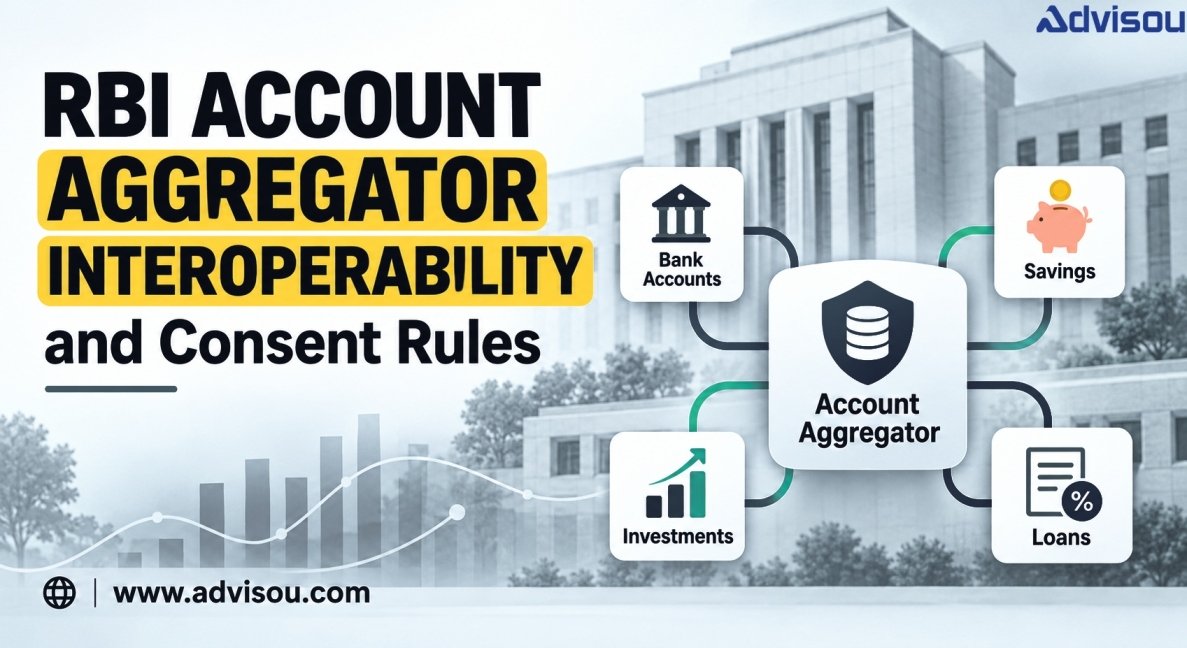
NBFC Account Aggregator, shortened to NBFC-AA, plays an instrumental role in making the financial sector more inclusive and customer-friendly. They share credit-seekers’ data with a certified lending partner swiftly, ensuring quicker assessment and granting of loans. However, things are about to take a great leap as interoperability between NBFC-AAs is enabled under the RBI Account Aggregator Interoperability framework. This transformative move can be a game-changer for the sector as well as the end-users. Let’s understand what this move is all about, what it means for NBFC-AAs, and how it will transform the end-users’ experience.
Table of Contents
ToggleDecoding RBI Account Aggregator Interoperability Move
On October 7, 2026, RBI[1] introduced the account aggregator interoperability framework, which requires NBFC-AAs to synchronize with each other. The deadline for implementation of this framework has been set to 31 Dec 2026.
In addition to this, RBI and SEBI have directed regulated depositories to link bank deposit account information to the Consolidated Account Statement (CAS) through the NBFC-AAs by the aforementioned deadline.
With this move, end-users will no longer be required to go back and forth between different apps and features to view their financial data. The interoperability framework will ensure a consolidated view of financial details in one place.
What changes are expected with this new framework?
The new account aggregator framework in India will enable:
- Synchronization among AAs, which means a single AA can serve as a source of all financial information. This means there is no need for banks, lenders, or end-users to connect with different AAs
- The customers want to get a clear view of their finances in one place.
- Deeper credit inclusion across semi-urban and urban sectors
- Quick assessment and grant of loans to a wider audience
- Banks, security platforms, and private lenders to operate swiftly without sacrificing safety and with greater transparency.
- End-users to make informed decisions; they will know what they have and what they owe in a matter of minutes
- Mutual growth of NBFC-AAs through data sharing will help them operate seamlessly
Does interoperability mean sharing customer data without consent?
No, RBI account aggregator interoperability will add value to the already growing account aggregator ecosystem. Regardless of the new move, NBFC-AAs do not share data mutually with each other or with third parties without the explicit consent of the customer.
They will continue to operate under strict RBI financial data-sharing rules, acting solely as encrypted pass-through conduits where data is never stored by the AA.
The Bottomline
The implementation of the RBI account aggregator interoperability framework will make the financial sector more inclusive, efficient, and transparent. In addition, it will eventually benefit end-users who used to deal with scattered financial information.
From tightening the NBFC-AA ecosystem to obliterating the end-users’ woes, this framework has the potential to transform the financial sector and the way NBFC Account Aggregators operate.
Furthermore, this will make the NBFC-AA domain more appealing to startups and budding entrepreneurs eyeing potential business opportunities.
Speaking of business opportunities, if you want to tap into this thriving sector, Advisou can help.
Our seasoned licensing experts have years of experience in highly regulated licenses offered by apex institutions, such as the Reserve Bank of India (RBI), SEBI, and IRDAI.
Advisou promises seamless and compliance-driven support right from the start, ensuring peace of mind for license-seekers. Contact us today to book a free consultation and let our experts lay the foundation for your dream venture.
Also Read: NBFC Principal Business Criteria
FAQs
Q1: Which notification mandates the implementation of RBI Account Aggregator Interoperability?
The interoperability timeline (31 Dec 2026) is mandated under the latest RBI directive on account aggregators alongside the RBI Master Direction – NBFC – Account Aggregator Directions
Q2: Does this move have anything to do with NBFC account aggregator consent?
No, data sharing relies entirely on explicit customer consent, not mutual consent between NBFC-AAs.
Q3: Does the implementation of RBI Account Aggregator Interoperability require informing the RBI?
Prior RBI approval is not required for standard interoperability integrations built on ReBIT API guidelines.
Q4: How can NBFC-AAs bring interoperability into action?
NBFC-AAs must adopt standardized ReBIT API architecture to meet such a mandate.
Q5: Do these framework reporting or compliance requirements
No, reporting or compliance requirements will remain intact as they used to.