
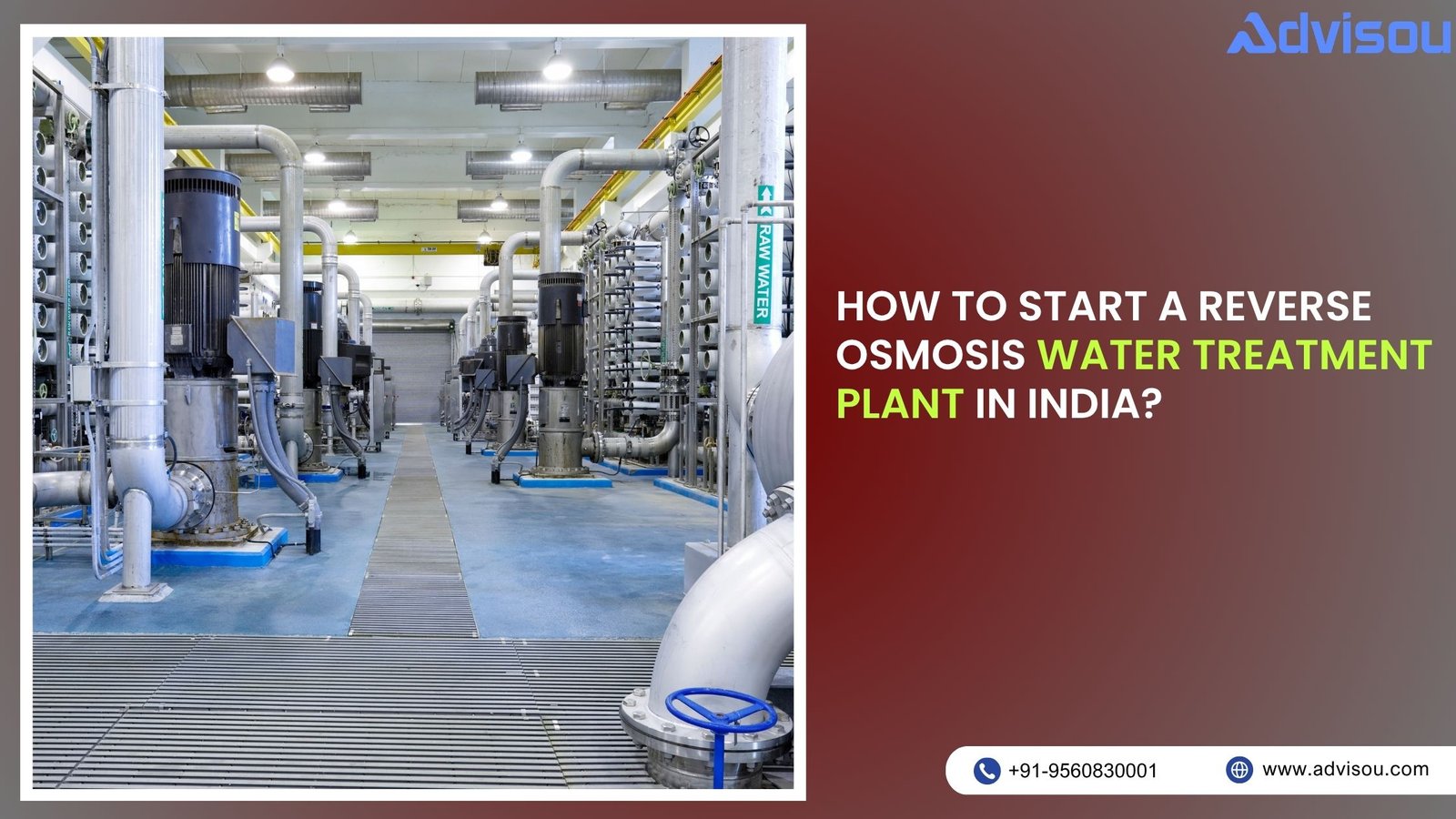
India is richly endowed with water, yet suffers from a lack of potable water. It is a scary situation, but some see the crisis as a powerful business opportunity. The scarcity of drinking water has led many to set up a reverse osmosis water treatment plant in India. If you are in doubt whether to initiate such a venture in India, this guide can be handy. This will provide a full blueprint of this business model, how it works, the licenses it requires, etc. So, let’s get going.
Table of Contents
ToggleHow does a reverse osmosis water treatment plant work?
The industrial RO plant follows a series of purification steps to reduce the Total Dissolved Solids (TDS) and eliminate the pathogens.
- Raw Water Intake: Borewell, municipal line, or water tanker water pumped to the raw water storage tank.
- Pre-Treatment (Multi-Media Sand & Carbon Filters): * Sand Filter: Eliminates suspended solids, dust, and turbidity
- Activated Carbon Filter Eliminates chlorine, organic materials, odor and color.
- Water Softener (optional): Ion-exchange resin to remove excess calcium and magnesium from very hard water (over 300 ppm).
- Micron Cartridge Filters: These are fine filters, typically 5-micron, that catch small particles just before the water goes to the membranes.
- High-Pressure Pump & RO Membranes A high-pressure pump pushes water through the semi-permeable RO membranes. Pure water molecules pass through while dissolved solids, heavy metals, and chemicals are rejected and flushed away.
- Post Treatment & Sterilization: Ozonization: Ozonize the water to destroy residual germs and increase shelf life.
- UV Sterilizer: Kills any residual viral or bacterial DNA in the final stage.
- Product Water Storage: The final purified water is stored in food-grade stainless steel (SS) tanks before bottling or jar filling.
Reverse Osmosis Water Treatment Plant: Understanding Infrastructure Needs
To get government clearances, your plant layout has to be as per strict hygiene standards.
- Land & Built-up Area: For a small-scale plant (1000 liters per hour), a minimum of 1,000 to 1,500 sq. ft. For large plants with in-house bottle blowing, you will need 3,000 to 5,000+ sq. ft.
- Civil Layout (Zoning): The facility shall be physically divided into dedicated zones as follows:
- Raw water storage and pretreatment zone.
- Main RO processing and filling room (should be dust-free and air-conditioned)
- Packaging and finished goods warehousing.
- In-house testing laboratory (compulsory for BIS compliance).
- Flooring & Walls: Smooth tiled flooring, easy to wash, and proper slope drainage. Walls: Walls should be covered with ceramic tiles up to 6-7 feet for the purpose of maintaining hygiene.
- Power Supply: Commercial A.C. power line. A 1,000 LPH plant usually has a load of 10 kW to 15 kW. We strongly recommend a diesel generator backup.
Reverse Osmosis Water Treatment Plant – Resources & Machinery
To operationalize the plant, you will need the following capital and human assets:
Equipment list
- RO generation system (core RO skid, pumps, vessels, and membranes)
- Storage Tanks: Raw water tanks (HDPE/SMC) and final treated water tanks (Stainless Steel 304/316 grade).
- Filling & Sealing Line: Semi-automatic or fully automatic bottle/jar fillers.
- In-house Laboratory Equipment: Autoclaves, incubators, Laminar airflow hoods, and chemical testing kits for daily quality audits.
- HR
- 1 Plant Supervisor / Chemist: B.Sc. or M.Sc. in Chemistry/Microbiology (mandatory for BIS approval).
- 1 Machine Operator/Technician: To perform routine plant maintenance and operations.
- 2–3 Helpers: for loading, packing, and washing jars.
- Delivery Staff: Drivers and loaders for market delivery.
Cost of Setting Up a Reverse Osmosis Water Treatment Plant
- To install a normal 1000 LPH (liters per hour) semi-automatic packaged water plant, a realistic initial capital of Rs.15 Lakhs to Rs.35 Lakhs is required.
- RO Machinery (1,000 LPH + UV + Ozone) ₹3,00,000 – ₹6,00,000 Estimated Cost (INR) Expense Head
- Semi-Automatic Bottle/Jar Filling Machine: ₹2,50,000 – ₹5,00,000
- Micro & Chemical Lab Setup In-house ₹2,50,000 – ₹4,00,000
- Civil Work, Tiling, Electricals, Piping: ₹3,00,000 – ₹6,00,000
- Licensing, BIS & Consultant Fees ₹2,00,000 – ₹3,50,000
- Initial Raw Materials & Working Capital Rs.2,00,000 – Rs.4,00,000
- Total Estimated Setup Capital Rs. 15,00,000 – Rs. 28,50,000
Licenses Needed for a Reverse Osmosis Water Treatment Plant Startup
Operating a commercial water plant without a license is illegal, and the penalties are severe. Approve these in this order:
- Company Registration: Proprietorship, LLP or Pvt Ltd registration with GST Number.
- CGWA NOC: Mandatory when water is extracted by a deep borewell.
- State Pollution Control Board (SPCB) NOC: Consent to Establish (CTE) and Consent to Operate (CTO) certificates for wastewater discharge.
- BIS Certification (ISI Mark under IS 14543): This is the most crucial step. Officials of the Bureau of Indian Standards (BIS) will inspect your plant, audit your in-house lab, and issue the license. Selling packaged drinking water without an ISI mark is illegal.
- FSSAI License: Food Safety and Standards Authority of India manufacturing license.
- Local Authority Permissions: Fire NOC, Factory License, Trade License from your local municipal corporation or Gram Panchayat.
Reverse osmosis water treatment plant setup in India involves meticulous planning and legal formalities. If you need professional help, Advisou can help you create such a venture without any hassle. Contact us today to turn your corporate vision into a reality.
Also Read: Amazon Seller Registration 2026: Process, Documents, Norms, and FAQs
FAQs
Q1. What is the ratio of pure water to wastewater in a commercial RO plant and what is the legal way of disposal of wastewater?
The plant produces an equal amount of pure water and high-TDS waste water. The reject water is supposed to be reused for secondary objectives like gardening or treated through an ETP instead of being discharged into public drains.
Q2. If I establish two factories or distribution hubs under the same brand name can I use one BIS license?
No, BIS is very strict on the “One Factory/One License” rule. Each physical plant location will require its own separate application, independent testing laboratory, and individual facility inspection.
Q3. Is it possible to set up a small-scale commercial water plant on a residential property?
No, a water plant is an industrial unit and can not function on residential property. To obtain mandatory SPCB and BIS approvals, you must be located on commercial or industrial land.
Q4. If my raw water supply fails a chemical or radioactive residue test in the first BIS inspection, what will happen?
BIS will reject your application immediately. You’ll have to switch to another approved water supply or install specialized pre-treatment filters to remove the specific contaminants before you can request a re-test.
Q5. Is there any provision of central or state government financial subsidy for setting up of RO water plant ?
Yes you can get subsidy of 25 to 35% from Government on the projects of upto ₹50 Lakhs under PMEGP scheme[1]. There are also loans without collateral available under the CGTMSE scheme by registering on the Udyam portal.